GENERAL INFORMATION
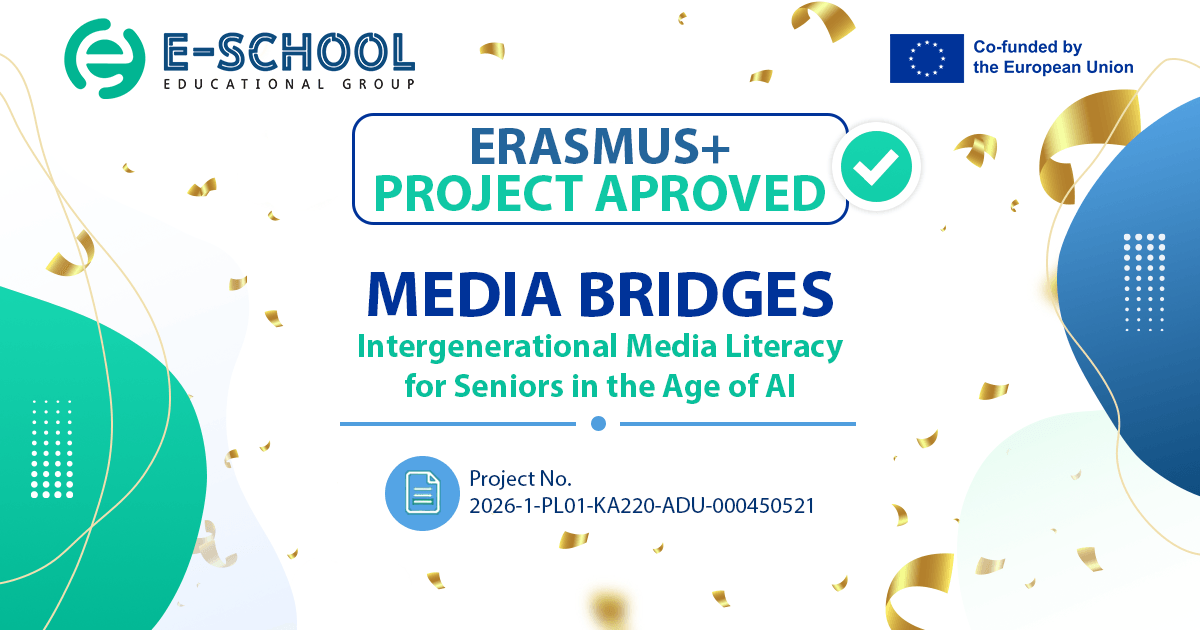
Project Title:Intergenerational Media Literacy for Informed and Resilient Communities
Acronym: MEDIA BRIDGES
Project ID: 2026-1-PL01-KA220-ADU-000450521
Programme: Erasmus+
Implementation period: 01/10/2026 – 30/09/2028
About the Project
MEDIA BRIDGES is an Erasmus+ Cooperation Partnership in Adult Education that aims to strengthen media literacy among older adults through intergenerational learning. As Artificial Intelligence reshapes the digital information landscape, the project empowers seniors to recognise misinformation, understand AI-generated content, and navigate online environments with greater confidence.
Project Objectives
MEDIA BRIDGES aims to:
- Strengthen media literacy and AI awareness among older adults.
- Promote intergenerational learning by connecting seniors with young mentors.
- Equip adult educators and librarians with practical teaching resources and methodologies.
- Foster critical thinking, digital resilience, and responsible participation in today's information environment.
- Build a sustainable European community that supports lifelong learning and media literacy.
Target group
MEDIA BRIDGES targets:
- Older adults (65+) seeking to improve their digital and media literacy skills.
- Adult educators, trainers, and lifelong learning providers.
- Librarians and community learning centres.
- Young people participating as mentors and facilitators.
- Municipalities, NGOs, and organisations supporting lifelong learning, digital inclusion, and active ageing.
Results
MEDIA BRIDGES will deliver:
- An Intergenerational Media Literacy Toolkit for adult education and library settings.
- Practical learning modules on media literacy, misinformation, algorithms, and Artificial Intelligence.
- Facilitator guides and ready-to-use educational activities for intergenerational learning.
- Our Media Survival Guide, co-created with participants to support responsible media use.
- An open-access multilingual Digital Platform hosting all project resources and a European Community of Practice for knowledge sharing and collaboration.
Partners
Funded by the European Union. Views and opinions expressed are however those of the author(s) onlyand do not necessarily reflect those of the European Union or the European Education and CultureExecutive Agency (EACEA). Neither the European Union nor EACEA can be held responsible forthem.